
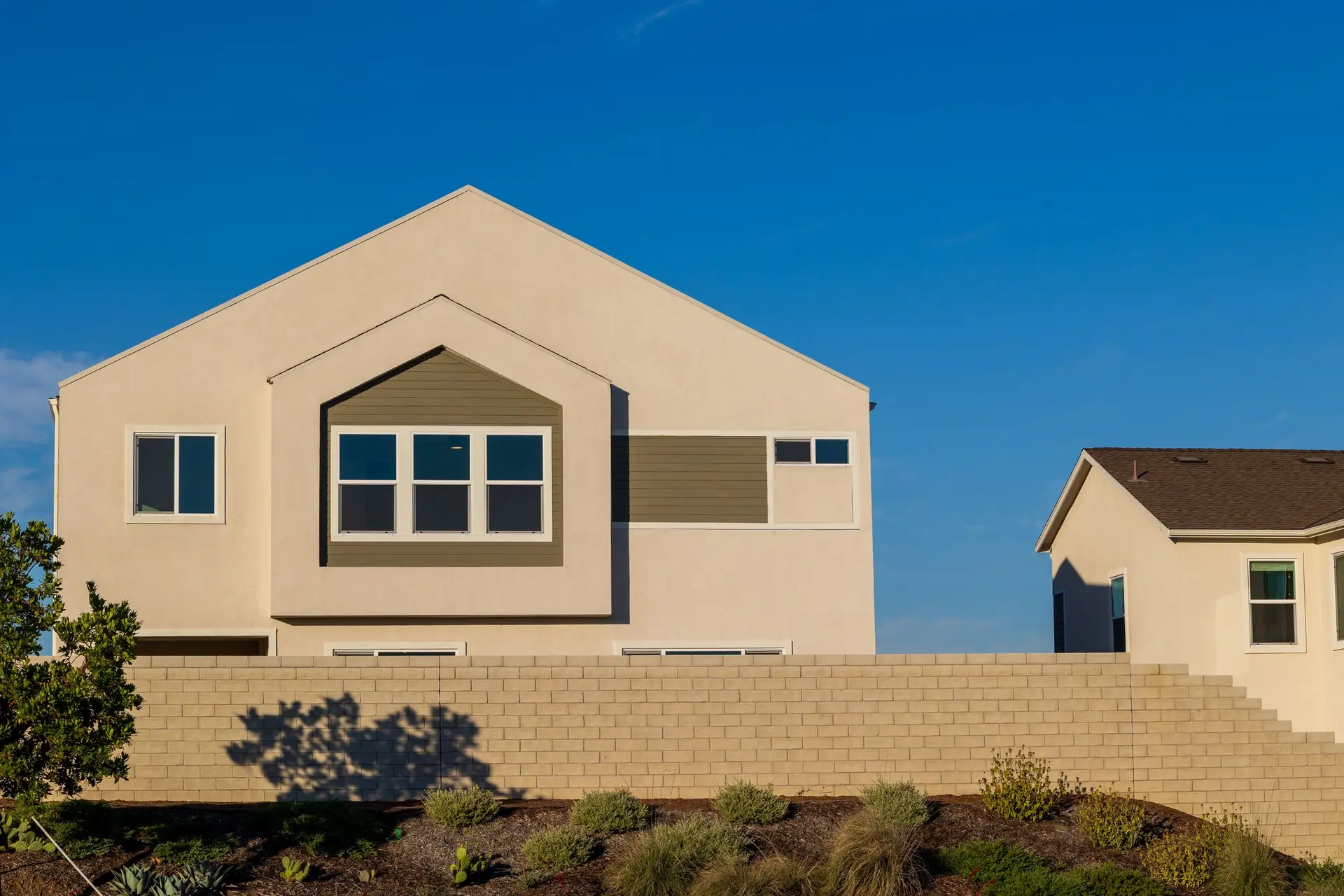
Stucco & Exterior Walls in Van Nuys
Stucco and exterior wall work for Van Nuys homes, built around water control: flashing, a drainage path behind the finish, a clear base and gutters.
Gutters, grade and a few inches of clear metal at the base decide where water goes on a Van Nuys house. A roof edge that spills onto the wall, a planter bed banked against it or a screed buried in soil all send moisture into the plaster. The scope for the job follows each of those paths from the roofline down to the ground.
Water from above
Roof runoff is the heaviest load a wall carries. Gutters need end caps that hold, downspouts that discharge well clear of the footing and kickout flashing where a sloped roof edge meets a wall. Behind the plaster, paper lapped from the bottom up carries any water that slips past the finish down and out. Head flashing above each window and door catches what runs down the face. With these parts working together, a wall dries after rain without help. Any gap in the chain, such as a missing end cap or a flashing lapped the wrong way, is listed in the scope with its repair.
Water from below
The base of a wall takes splash and ground moisture. The weep screed, a slotted metal strip, stays visible above paving or soil so its drainage slots remain open. Plaster that touches a slab or planter draws moisture upward, so a gap is cut or the soil is pulled back. Should the lot fall toward the house, a regrade or a surface drain may belong in the scope, and sprinklers get re-aimed away from the finish. Photos of the base are taken once the soil is pulled back, because that is where the drainage slots are first seen.
About our Stucco & Exterior serviceEverything we build in Van Nuys
Stucco & Exterior in Van Nuys: questions
Cement plaster, fiber cement and lap siding all qualify as fire-resistant coverings. Water control sets them apart: plaster needs a drainage plane behind it and a screed at its foot, while board siding wants a ventilated gap and sealed cut edges. Pick the finish that suits the house, and the water details follow from that choice.
Yes, when the damage stays in the finish. A crack that does not move, with plaster that sounds solid on both sides, is routed and filled. A crack that sheds stains, or plaster that sounds hollow, points to a water path behind the wall, and that gets traced back to its cause before any filler goes in.
Behind the finish sits a deliberate sequence for moving water. Sheathing is wrapped in lapped paper, window and door openings are flashed in order, and lath is fixed over the top. Plaster fills the lath. The paper lets drained water travel down to the screed, where it escapes. Skip a layer or lap it backward, and moisture stays inside the wall.
Stucco & Exterior in other cities
More we build in Van Nuys
What are you building in Van Nuys?
Tell us about the property and what you have in mind. We reply with a written next step.