
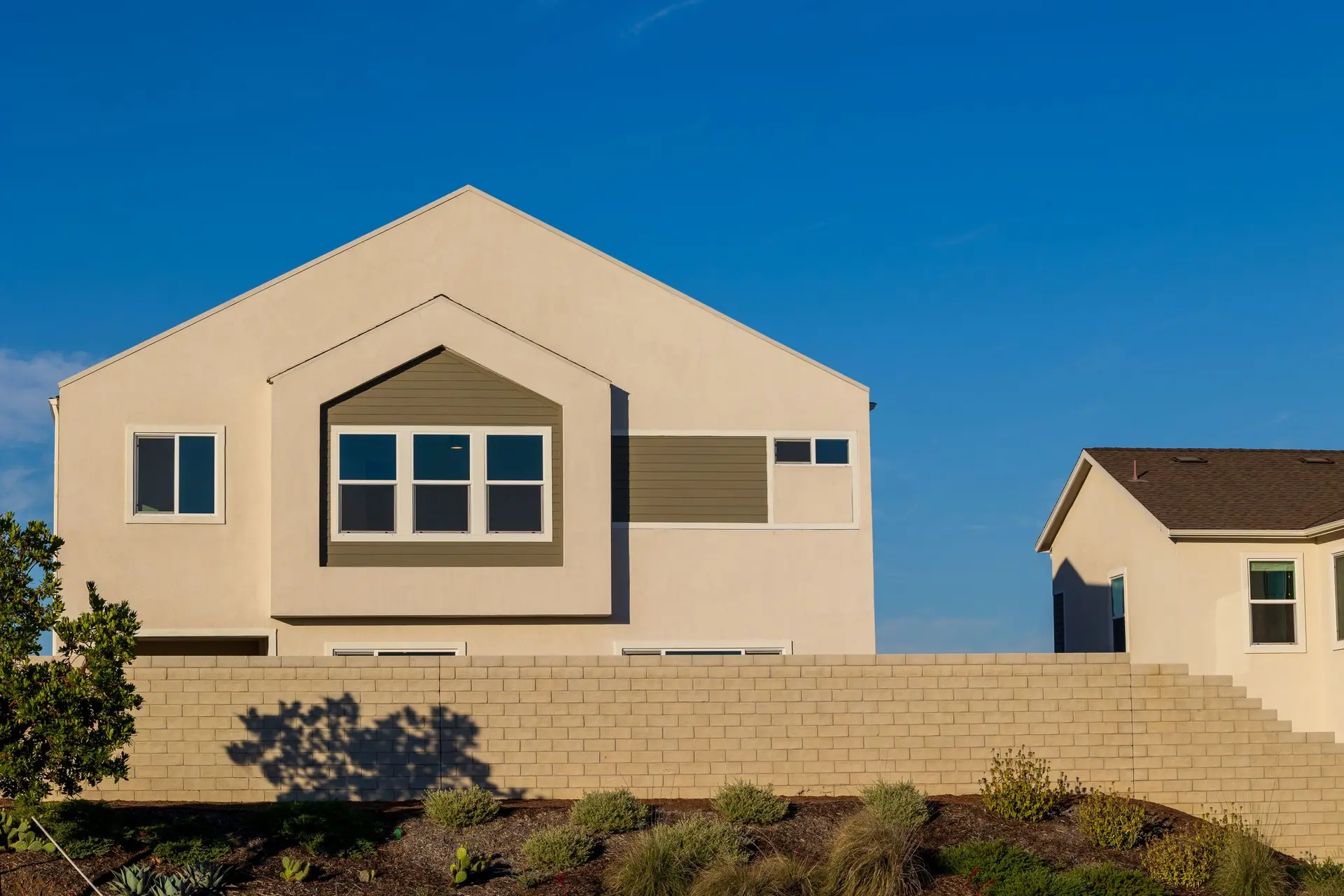
Stucco and exterior walls
The outside wall is the first thing a fire reaches. We build exteriors with ignition-resistant materials and a weather barrier installed in the right order.
Choosing the outside skin of a rebuilt house
Three-coat stucco, fiber cement panels and lap siding are all noncombustible or ignition-resistant choices. Each looks different and asks for different upkeep. In a mapped fire hazard area the code limits what can go on the wall, and we keep the options to those that pass.
What sits behind the finish
A sound exterior wall is layered: sheathing, a water-resistive barrier, flashing at every window and door, then lath and stucco or the siding itself. Most failures start where one of those layers was skipped or lapped the wrong way, so we treat the hidden layers as the main event.
Repairing a wall that survived
Heat can crack stucco and blister paint on a house that did not burn. We cut out damaged sections, repair the paper and lath behind them and blend the new finish into the old, then recoat the wall if a patch would show.
Stucco & Exterior: questions
Stucco is noncombustible and performs well against embers and radiant heat. It still needs well-sealed openings and ember-resistant vents to protect the house as a whole.
Often, yes. We check whether the damage stops at the surface or reaches the lath and framing. Surface damage can be patched and recoated. Deeper damage means opening the wall.
It is the metal strip at the bottom of a stucco wall that lets trapped water drain out. If it is buried or missing, moisture stays in the wall, so we keep it clear and above grade.
Ask about your walls
Tell us whether this is a new exterior or a repair. We reply with a time to look at the walls.