
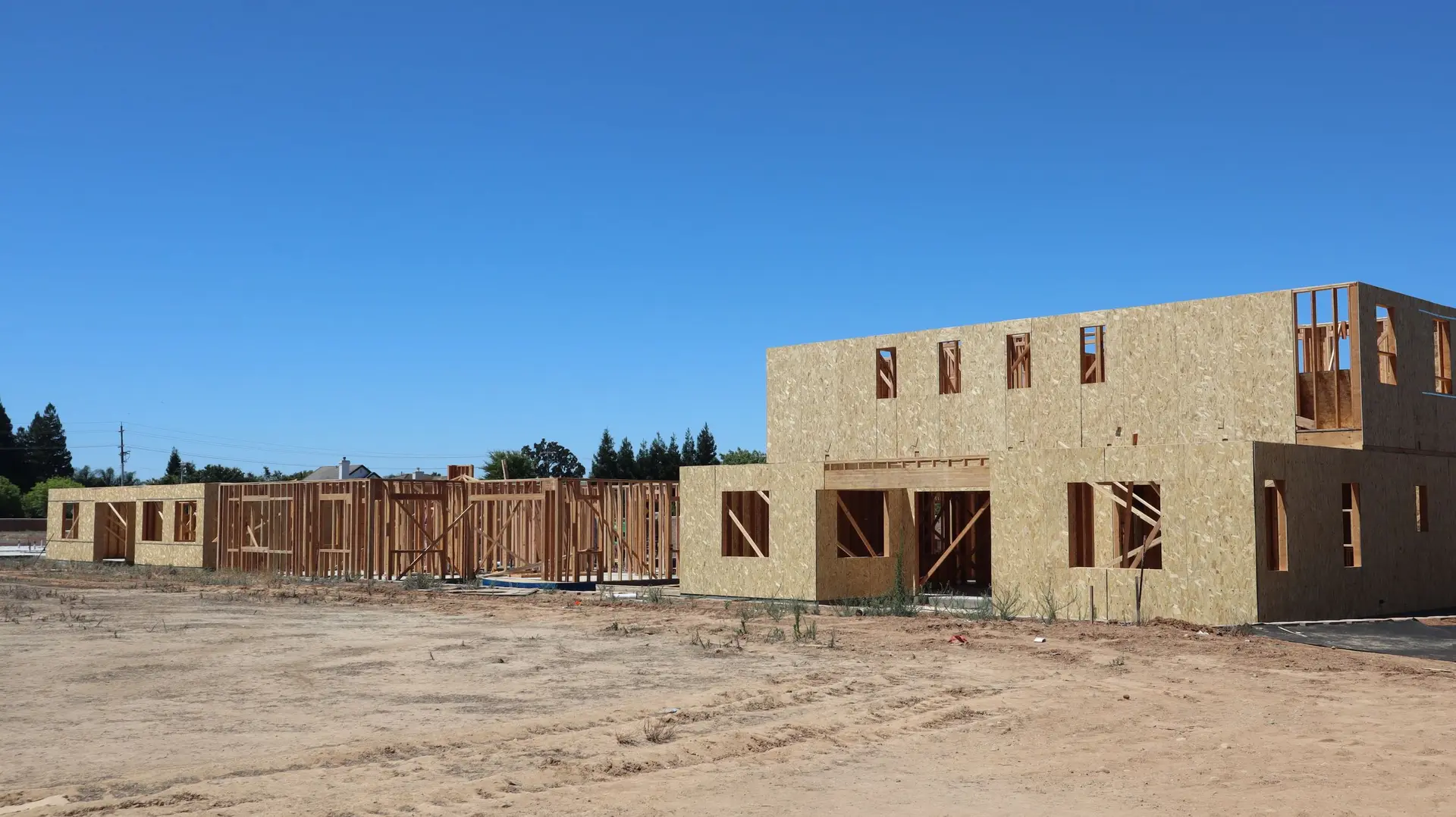
New Construction on Your Mission Hills Lot
New construction in Mission Hills that checks the city's methane map first, so any soil gas testing and slab mitigation are designed and priced early.
A new Mission Hills slab may need to hold back a gas no one can see. The City of Los Angeles maps methane zones and buffer zones, and a parcel inside one can require soil gas testing before design. Depending on the readings, the house may need a membrane under the slab, vent piping and sometimes an alarm. We check the map for the address first, since the result changes the foundation and the price.
Testing the soil gas
If the parcel falls in a mapped zone, a qualified testing firm takes soil gas samples at depths set by the city's standards and measures methane concentration and pressure. Those readings place the site in a design level, and each level carries its own required measures. A low result may call only for a passive system, while a higher one adds layers. We order the test once the footprint is roughed out, so the probes sit where the house will, and the report goes to the structural engineer and the plumbing designer.
What mitigation adds to the house
A typical system starts with a gravel layer and perforated pipe under the slab that collect gas and carry it to vent risers running up through the roof. Over the gravel goes a membrane rated for gas, sealed at every pipe and post that passes through it. Higher levels can add a detection alarm or mechanical ventilation. LADBS reviews the mitigation plan with the building permit, and a special inspector may check the membrane before concrete covers it. Each part appears as its own priced line.
About our New Construction serviceEverything we build in Mission Hills
New Construction in Mission Hills: questions
The city's methane map comes first for this address, alongside a boundary survey, soil findings and the parcel's zoning. Utility connection points matter too. On a mapped parcel, the soil gas test joins that list early, since it sets what goes under the slab.
Exploration, survey, soils, engineering and LADBS plan check form the first stage, with any soil gas testing included. Once LADBS issues the permit, construction gets priced phase by phase, and a mitigation system, if one is required, has its own written line before the foundation crew starts.
We set the order for each consultant. The survey comes first, soils work second, and the methane tester joins when the parcel is mapped. The structural engineer then designs the slab around both reports. Contracts may be yours or ours, and every report feeds one schedule.
New Construction in other cities
More we build in Mission Hills
Plan your project in Mission Hills
Tell us about the property and what you have in mind. We reply with a written next step.