
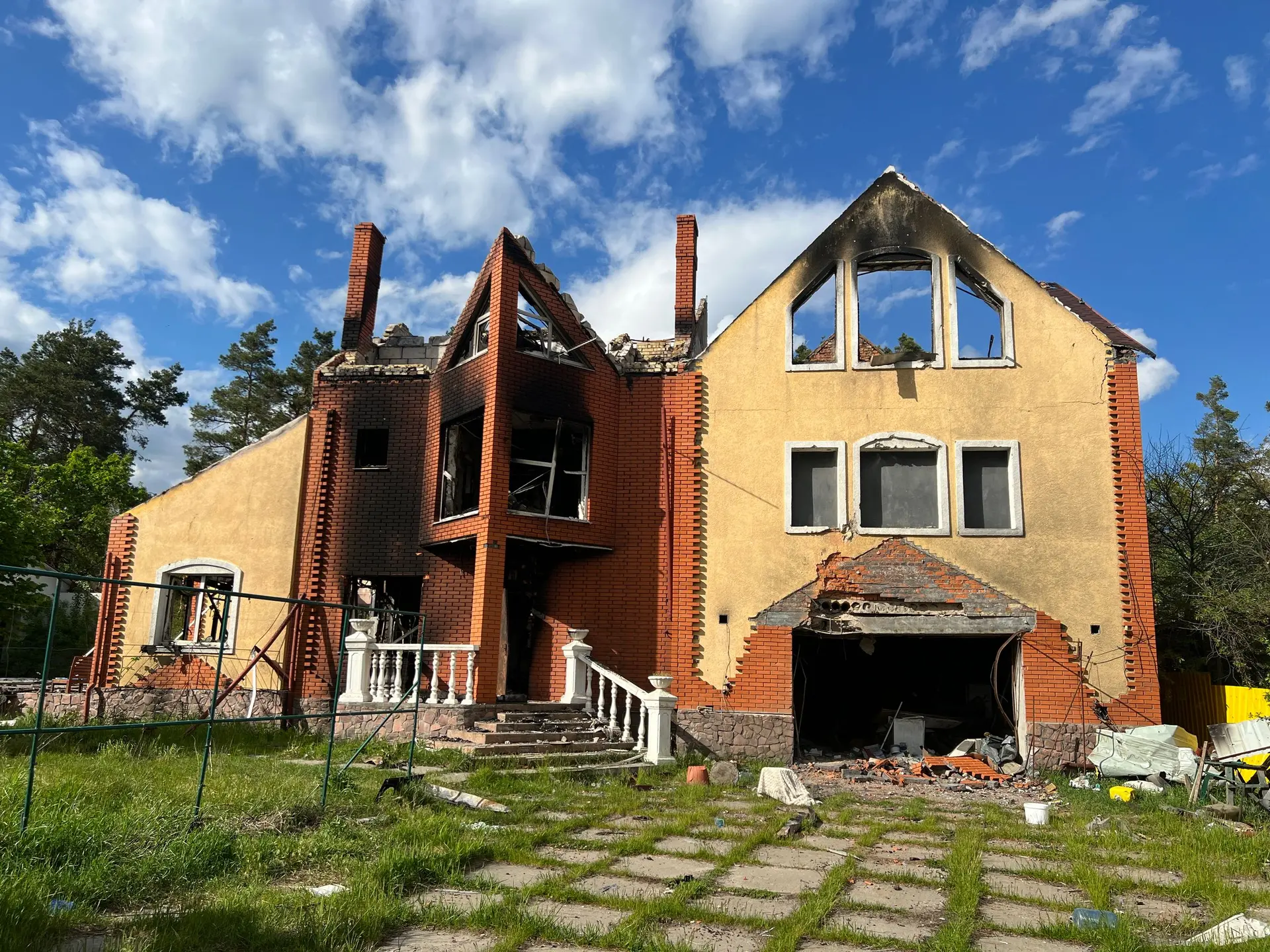
Not every Pacific Palisades house that met the fire is a cleared lot. Many still stand, with a scorched wing, a roof opened by the flames, or rooms that smell of smoke months later. For these owners, fire damage restoration is a real choice, and the first question is a hard one: is this house worth repairing, or does it make more sense to take it down and rebuild?
That answer belongs to the structure, not to a guess. We open the house, look at what the heat and the water did, and price both paths in writing so you can compare them side by side.
If your house is still standing, send the address and a few photos of the worst rooms to ask for a written quote. We reply with a date for the walk and a list of what we will check.
A partly damaged house is its own kind of job
A full rebuild starts from bare ground. A repair starts from a house that has already been through a fire, which means every surface has a story we have to read before we can price it. Framing that looks fine from the room may be charred inside the wall. A roof that kept its shape may have lost strength in the rafters. Water from the fire hoses may have soaked insulation, subfloors and the crawlspace long after the flames were out.
The work comes in three layers. First, we find the edge of the damage: where charring, heat stress and soaking stop, and sound material begins. Second, we decide what comes out and what stays. Third, we write the scope that puts it back to today's code, room by room and line by line.
For a house that came through with light damage, that scope can be mostly interior work under our whole-home remodeling service. When the frame or foundation took the heat, it moves into structural work. When too little survives, it becomes a fire rebuild.
What sets the price of fire damage restoration
No two burned houses price the same way. Four things move the number more than anything else.
How much structure survives. This is the largest single factor. Each wall, rafter, joist and footing that tests sound is one we do not have to replace. Each one that fails adds demolition, new material and engineering. A wing that burned through can cost more than the rest of the house combined.
How far the smoke and water reached. Smoke travels into ducts, attic space and wall cavities well past the burned rooms. Water does the same at floor level. Cleaning a sealed surface is a small line. Removing and replacing soaked drywall, insulation and flooring across a whole floor is a large one. We trace both before we write a figure.
Code upgrades the repair triggers. Once a repair opens enough of a house, the parts we rebuild have to meet the code in force today, and sometimes more of the house follows. On a lot inside a mapped fire hazard area, that can mean new vents, roofing, siding and glazing on the rebuilt parts. Wiring and plumbing we open may need to come up to current standards. We list each upgrade on its own line, since many policies cover them under a separate limit.
Permits. What the repair has to file, and which plans go in with it, is decided by the city's building officials. A small interior repair and a structural rebuild of one wing sit on very different paths. We confirm them for the address and carry the filing for you.
Signs that point toward a full rebuild
Repair is often the right call. Sometimes it is not, and it helps to know the signs early, before money goes into a house that will come down anyway.
- The foundation took direct heat. Concrete and its steel can lose strength in a hot fire. If testing shows the slab or footings are weak, most of what sits on them has to come off.
- Damage runs through the roof and the frame together. When both are compromised, a repair starts to look like a new house built inside an old outline.
- Smoke and water reached every room. If the whole interior has to be stripped to the studs, the gap between repair and rebuild narrows fast.
- You wanted to change the house anyway. A larger kitchen, a second story or a new layout can tip the math toward starting fresh, since the new design no longer has to fit the old walls.
None of these decides it alone. We put them on paper, price each path, and let the numbers show where the line falls for your house.
How the visit and the written quote work
The first visit is a walk through the house and around the lot. We look at the frame where we can see it and open small test areas where we cannot. We check the roof structure, the crawlspace or slab, the electrical panel and the plumbing runs. Where the frame or foundation is in question, we bring in the engineer.
Then we write the quote in the order the work would happen: protection and demolition, structural repair, roof, rough trades, insulation, drywall, finishes and fees. Each line says what it includes. If a full rebuild is also on the table, we price it in the same format, so you can lay the two side by side and see which lines differ and why.
That same layout is what your adjuster will want to see. Where our scope and the insurer's estimate part ways, the line items show exactly where, and you have something specific to raise.
What to have ready
These help us price the first visit faster:
- The property address and a time we can walk the house.
- Photos of the most damaged rooms and the roof, if you can take them safely.
- Your policy declarations and any estimate the insurer has already sent.
- Old plans, permits or a survey of the house, if you have them.
- A short note on what you would change if you were building new.
Ready to find out where your house stands
A house that came through the fire deserves a straight answer about whether to repair it or rebuild it, with both paths priced. We are based in Pacific Palisades and work in Brentwood and Santa Monica next door. Call us, or send the address through the form, and we will set the time to walk the house.