
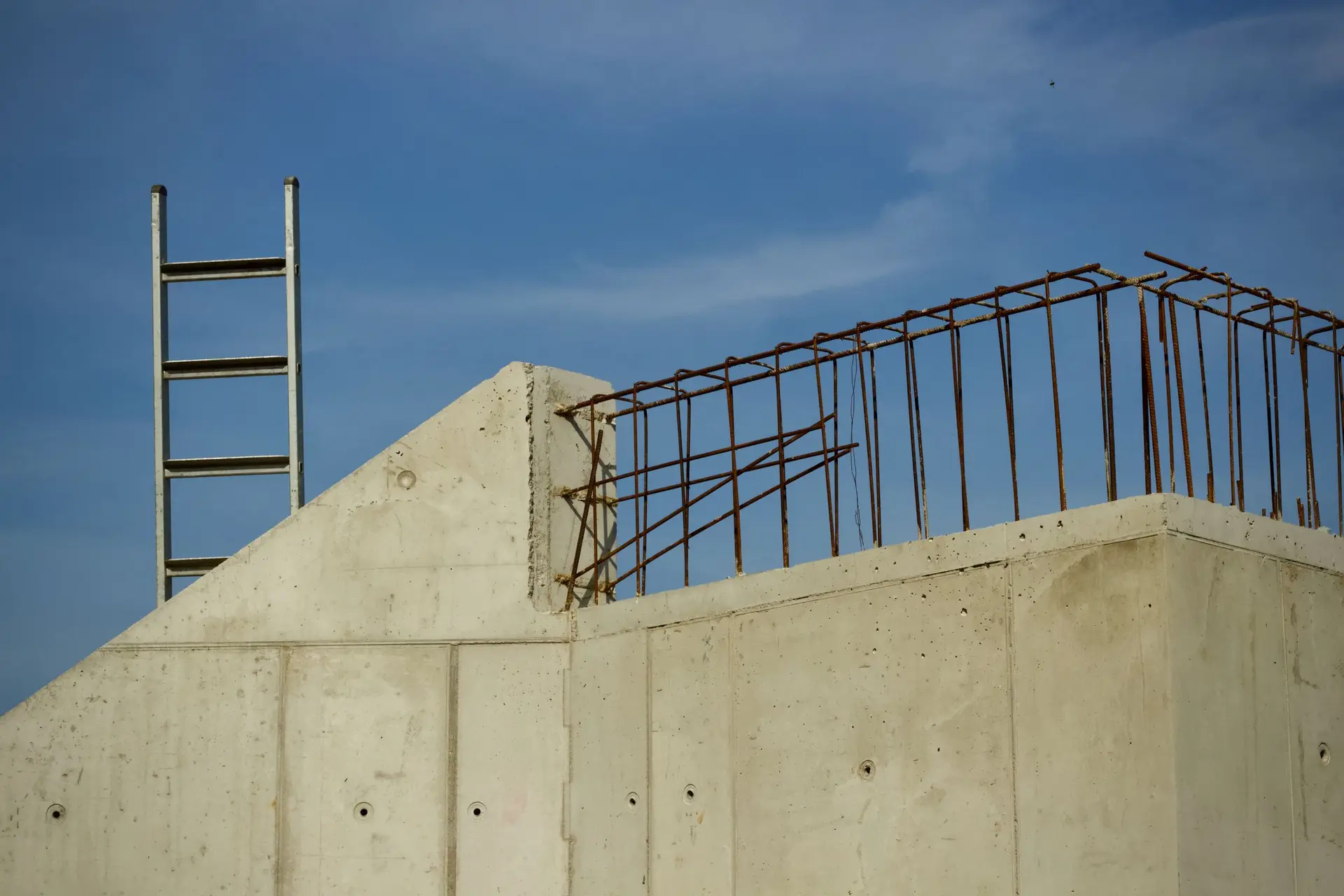
The day a lot is finally cleared feels like progress, and it is. It is also the moment the real list of decisions begins. How big will the new house be? Can the old foundation stay? What will the insurer pay for, and what will the code now require? Which builder should carry the work, and in what order should everything happen?
This guide walks a Pacific Palisades rebuild from bare ground to the morning you move back in. It is written for owners who lost a house and want to see the whole path before they take the first step on it.
The order of a rebuild
Every rebuild follows roughly the same sequence. Knowing it helps you see which decisions are urgent and which can wait.
- Debris clearance and site release. The lot has to be cleared, tested where required and released before construction can start. Ask for written confirmation that your parcel is released, and keep it with your project file.
- Survey and soils. A boundary and topographic survey fixes the property lines and the existing grades. A soils report tells the engineer what the ground can carry. If the old house had a foundation that may be reused, this is when it gets tested.
- Design. With the survey in hand, the designer draws the house. This is where you decide whether to rebuild close to what stood before or to change it.
- Engineering and energy. The structural engineer sizes the foundation, framing and lateral system. The energy consultant prepares the compliance forms the state requires.
- Permits. The plans go to plan check, corrections come back, the designer and engineer answer them, and the permit is issued.
- Construction. Foundation, framing, roof, rough plumbing, electrical and mechanical, insulation, drywall, finishes. Each stage is inspected before the next one covers it.
- Final inspection and move-in. The building department signs off, utilities are released and the house is yours again.
Steps 2 through 4 can overlap. A builder who coordinates the surveyor, designer and engineer together can save weeks here, because the design never waits on a missing number.
Like for like or larger: what changes
Pacific Palisades lies inside the City of Los Angeles, which means its building permits are issued by LADBS, the city building department. After the January 2025 fire, the city created a like-for-like rebuild path through an emergency executive order. As the city has described it, a house rebuilt in substantially the same location and no more than 110 percent of the original footprint and height can skip several planning reviews, and certain older setbacks may stay as they were.
Build beyond that, and the house goes through a different, longer review and must meet current zoning in full. Neither choice is wrong. The point is to make it knowingly, with the time and cost of each path laid out before the design is fixed. These orders have been amended more than once, so check the current version on the city's rebuild pages, or ask us to check it for your parcel.
Whichever path you choose, the house itself must meet the building code in force today. Like for like describes the size and placement of the house, not the age of its construction details.
Insurance scope and the builder's estimate
Your insurer will likely prepare its own estimate of what it costs to rebuild. Your builder will prepare another. They rarely match on the first pass.
The useful thing is to get both in a form that can be compared line by line. Our estimates follow the order of construction: site work, foundation, framing, roofing, each trade, insulation, drywall, finishes, fees. When the insurer's number for framing is lower than ours, you can see exactly which line differs and ask why. That comparison is often what an adjuster needs to take a second look.
Code upgrades deserve their own lines. A rebuild must meet current code, and many policies treat those upgrades as a separate coverage with its own limit. Seeing them listed separately tells you how much of your budget depends on that coverage.
Building to the wildfire code
Large parts of Pacific Palisades are mapped as a Very High Fire Hazard Severity Zone. You can check a parcel's status through the city's ZIMAS parcel map. On a lot in that zone, the wildfire chapter of the state building code (Chapter 7A) shapes the outside of the house:
- Ember-resistant vents for the attic and crawlspace.
- A Class A roof assembly.
- Exterior walls with ignition-resistant or noncombustible cladding.
- Dual-pane windows with at least one tempered pane.
- Decking and other attached structures in ignition-resistant materials.
Building these in from the first drawing costs less than adding them later, and it avoids surprises at inspection. Our fire rebuild service page covers how we plan for them.
How to choose a rebuild builder
After a fire, a lot owner may hear from many builders at once. A few questions separate the ones who are ready for this work:
- Will you write the estimate in a form I can compare with my insurance scope? A lump sum is hard to check.
- Who coordinates the survey, design and engineering? One schedule beats three separate ones.
- How will you test and decide on the old foundation? The answer changes the budget.
- Which fire code details will you include, and where are they in the plans?
- How will you keep me updated during construction? You want a written note at each inspected stage.
- Is your license active? You can check any California contractor on the Contractors State License Board website.
A builder who answers these clearly and in writing is one who has thought about how a rebuild actually runs. If the foundation or framing needs repair before anything else, our structural work page explains how that stage fits in, and new construction covers the case where you start entirely fresh.
Where to begin
You do not need every answer before you start. You need the lot address, any plans or survey of the old house you can find, and your policy declarations. From there, the first step is a walk around the lot and a written list of what has to be decided, in order.